Language and Culture: Making the Connection
2008 exploration seminar in Guilin,
China
Program director: Liping Yu,
Date of instruction: Aug 25-Sept. 17
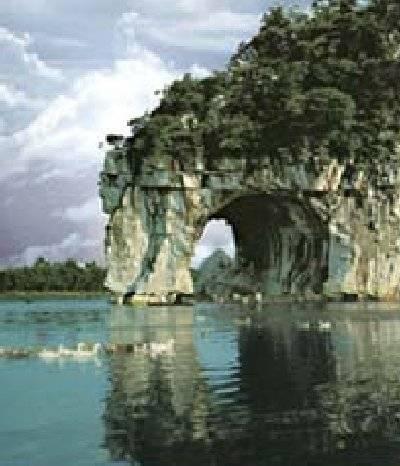 The objective of this 2008 UW exploration seminar in Guilin China is
to give our students first hand experience of the ancient yet young China, since China has undergone a dramatic
change in the past 30 years.
The objective of this 2008 UW exploration seminar in Guilin China is
to give our students first hand experience of the ancient yet young China, since China has undergone a dramatic
change in the past 30 years.
Language is culture and culture is
language. This trip will certainly
complement the language classes that are offered at UW. In this trip our students are not only going
to observe China with their own eyes, but also to live like a Chinese by
adapting themselves to a Chinese style of living. UW students will be paired up with Guangxi Normal University
students in order to provide an opportunity for UW students to enhance their
education through direct engagement and interaction with Chinese students,
teachers, and ordinary Chinese people.
Our exploration seminar takes place
in Guilin, which is an historical and cultural
city as well as a tourist wonderland of world fame. It literally means
"cassia tree forest", named for the local cassia trees, whose scent wafts
through the city in fall. Located
in the deep south of China, Guilin has less western
influence. It is a city with a profound
historical and cultural background. Guangxi Normal University,
the best university in Guangxi, will be our hosting university. To immerse our students into Chinese culture
in a structured way, our seminar consists of three major parts: cognitive
instruction of Chinese culture, field trips related to the lectures, and
language classes. There are 8 cultural
lectures that will touch on a wide variety of topics of China. The
topics will be Chinese education, Chinese music, traditional Chinese medicine, culinary
art, traditional Chinese painting and calligraphy, Chinese ethnic groups, and environmental
protection in China. Then the related field trips will be
visiting Chinese elementary and middle schools, visiting Chinese hospitals, making
Chinese food, visiting art museums, gathering together with minority groups,
etc. All these lectures are taught by
professors from Guangxi Normal University and the field trips will be led by faculty
from UW and Guangxi
Normal University. The language classes will be taught by Liping
Yu, the Chinese lecturer from UW and local teaching faculty. Students will be put into different language
classes according to their language proficiency. Altogether there are 12 hours of language
classes, and students will have the opportunity to do one-on-one individual
session with their language teachers. They can practice speaking Chinese with a
professional language instructor.
Be prepared for the adventure of your lifetime! In
addition to the lectures and classes, students will have the opportunity to cruise
down the Li River, which winds through some truly spectacular limestone
formations, climb Mount Longsheng with its famous Longji rice terraces, visit
Ling Canal, which was built by the first emperor in China from Qin Dynasty, visit
Reed Flute Cave, which is a limestone cave with
impressive stalactite and stalagmite formations, and sit in a classroom
and student dorm from mountainous areas in Guangxi. We will also spend two days
visiting Beijing, the capital of China. We will go to the very center of Beijing and
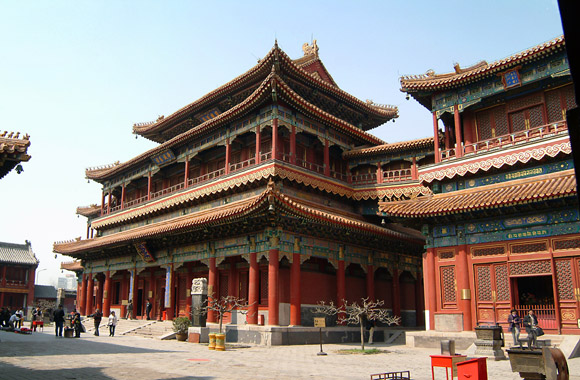
tour TianAnMen Square, visit YongHeGong, one of the largest and most important
Tibetan Buddhist monasteries in the world, visit Madam Sun Yat-sen's residence for a brief
review of modern Chinese history through the life of an ordinary yet great
woman in China, visit the Olympic park
in Beijing, to have a better understanding of what Chinese people have done to
prepare for the Olympic 2008. We will
also have the opportunity to wander along the narrow alleys in the center of Beijing to glimpse ordinary Beijing life in the past and today.
 Students will have some
free time to explore the city of Guilin
on their own. They can experience both
rural and urban life in China,
meet local people, and of course, sample the delicious, Guilin
cuisine.
Students will have some
free time to explore the city of Guilin
on their own. They can experience both
rural and urban life in China,
meet local people, and of course, sample the delicious, Guilin
cuisine.
Class assignments will include keeping a diary of reactions
to each site we visit, group discussions, and write a short paper describing
one cultural aspect that interest you and a final exam for the Chinese language
class.
Students will receive 5 credits for Chin 395 or CHID
474. Participants should check with their advisors to determine how these
credits can count towards departmental requirements.
Students costs:
$2550
program fee
$200 IPE
fee
Additional costs include: Round trip to Chengdu,
visa, health insurance and personal spending money.