Autumn
2012
FISH/BIOL 340 - Genetics and Molecular Ecology








Laboratories
Section A: Th, 1:30 - 4:20
Section B: F, 8:30 - 11:20
Section C: F, 1:30 - 4:20
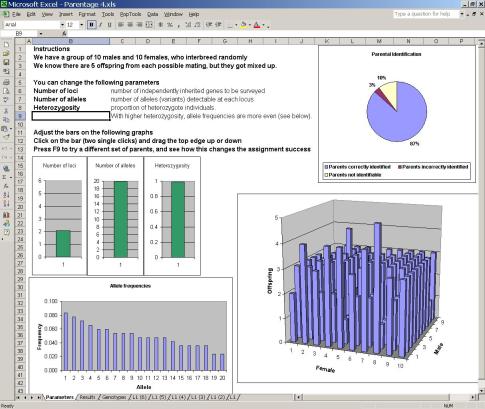
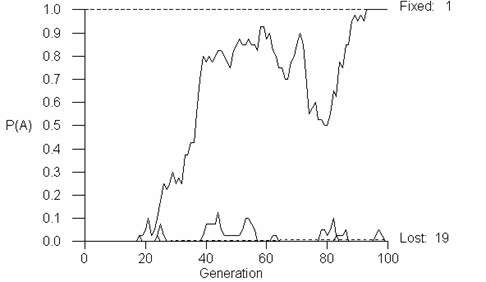
The class will include both molecular and computer labs. In the computer laboratories we will use simulation programs to learn about genetic processes and analysis programs to analyze sample data sets. In the molecular laboratories we will conduct a study identifying dried seahorses to species (see project page).
Lab handouts and materials will be posted on the Catalyst Workspace by Tuesday of the respective week in the tables below. Students are required to print out these handouts, read them and bring them to the lab (there will be no print-outs in the lab). At the end of each handout, there are some pre-lab questions. These questions are very easy to answer if you read the handout - your answers will be graded and you will not be allowed to proceed if you haven't answered them. In some labs, there is also a lab report, which are questions that groups are required to fill in during the lab. Please print those out as well and bring to the lab.
You will be required to keep a lab notebook - here are some guidelines how it should look like. We will talk more about lab notebooks in the first lab. These lab notebooks will be collected and marked during the midterm exam.
In each lab, there will be some form of reporting, which will vary among labs. Make sure to come on time and take notes.
Make up labs: laboratories take considerable time to prepare. Therefore, we will not offer make-up labs. If you cannot come to a lab, let us know at least a week in advance. If the absence is justified, we will try to accommodate you in one of the other sections.
Molecular Labs |
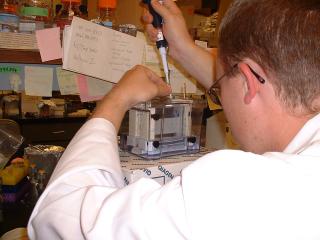 |
Molecular Labs will be offered in rooms FTR 113. These labs represent a new molecular teaching facility of the School of Aquatic and Fishery Sciences. Most of the equipment (especially pipettes) is new, so take care of it.
Rules
Always remember that we are working with hazardous materials. Sloppy handling of such materials does not only endanger you, but also other course participants. We will give you some additional information about lab safety in the first lab.
- No eating or drinking in the laboratory. Do not store food or drink in any of the laboratory refrigerators.
- Store bags and coats on the hangers provided. The use of cell phones is not permitted during class time.
- Wear clothing that leaves minimal bare skin showing, i.e. long pants, long sleeves, socks with shoes. Open-toe sandals are not allowed. If you are not suitably dressed, you will not be admitted to the laboratory.
- Lab coats are required.
- All accidents and spillages must be reported to the instructor or the TA.
- Goggles and gloves have to be worn while working with hazardous materials.
- Do not move any equipment, or change any set parameters on any equipment, without permission of instructor or TA.
 |
Computer Labs |
 |
Most computer labs will be offered in room FSH 136, which has 24 new PCs. Some knowledge of Excel will be assumed, though we are happy to help you. Computer labs usually involve some homework - as we sometimes finish early, the remaining time is a great way to do this homework with our help. You can also use that time to ask questions about lecture.